Strange Pianos
Concerto su strumenti rari dalla collezione dell’artista
Concert on rare instruments from the artist’s collection
Jacopo Mazzonelli
Eleonora Wegher
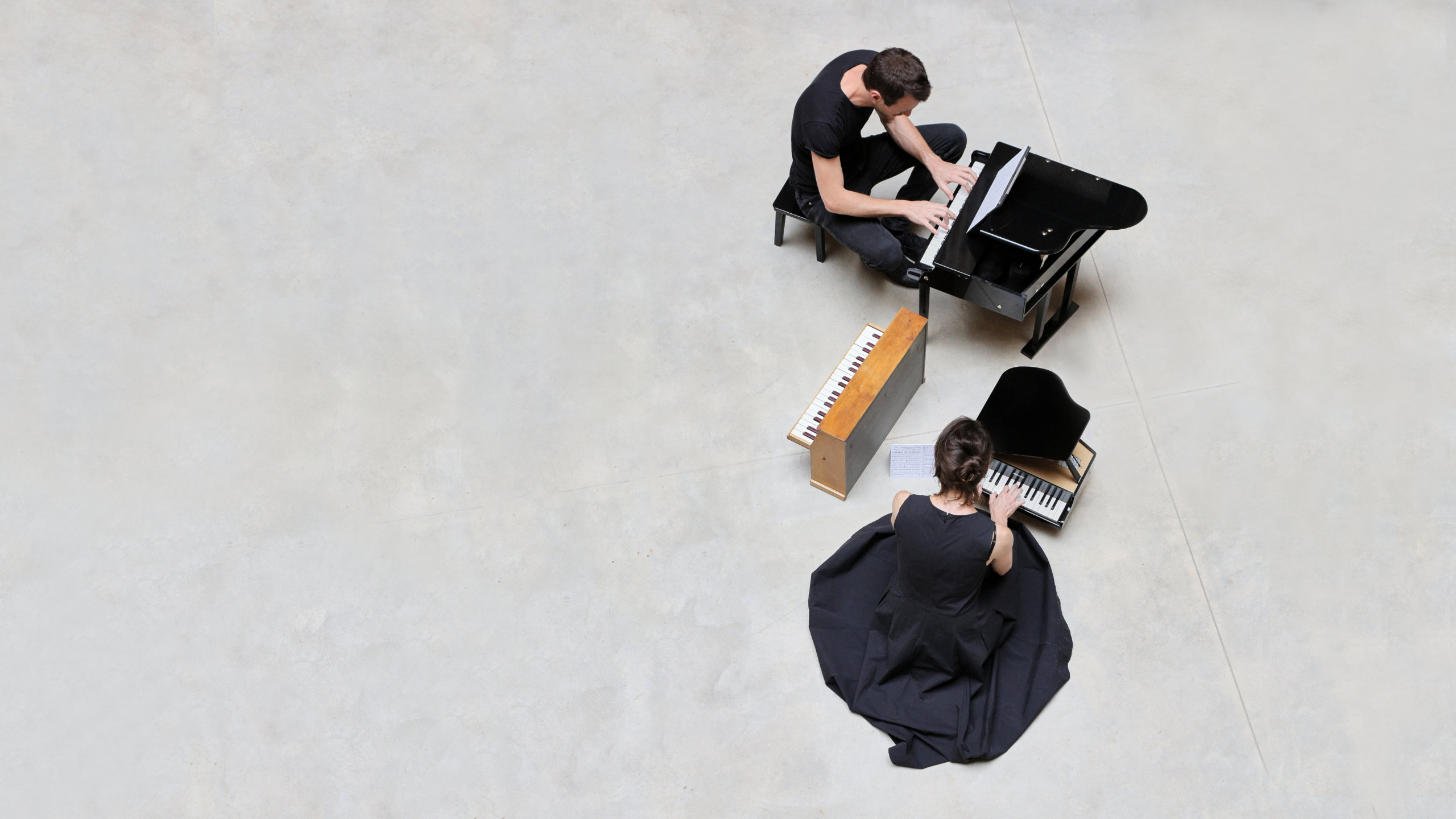
Jacopo Mazzonelli, artista visivo, musicista e performer, da anni colleziona insieme alla pianista Eleonora Wegher strumenti musicali rari e preziosi in virtù delle loro peculiari caratteristiche. Accomunati dall’essere strumenti a tastiera, e appartenenti idealmente all’ampia famiglia delle percussioni, tali strumenti sono stati perlopiù prodotti in quantità molto limitate. Attraverso un’attenta ricerca ed a seguito di un meticoloso lavoro di restauro, gli strumenti hanno riacquisito oggi il loro stato originario. Protagonisti di un concerto dove il repertorio è stato pensato, curato e selezionato per esaltarne le differenti singolarità, gli strumenti vengono non solo suonati, ma anche raccontati e mostrati al pubblico, in un percorso di inusuale scoperta musicale, timbrica e organologica.
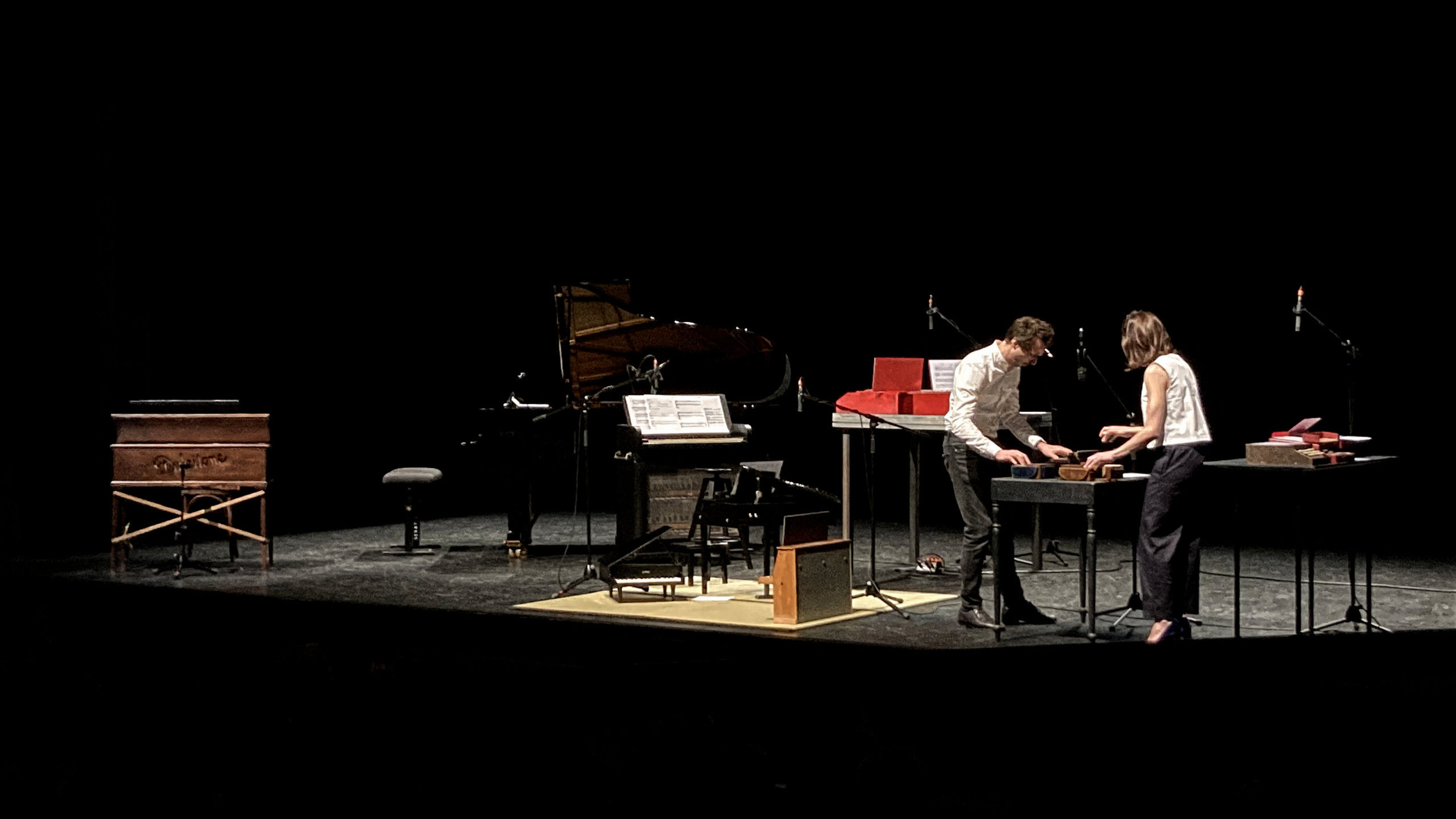
Tra questi, troviamo la Celesta, inventata nel 1886 da Auguste Mustel e portata in segreto da Parigi a San Pietroburgo per volere di Tchaikovsky, che la fece debuttare durante la prima del balletto “Lo Schiaccianoci”. Il Dulcitone, progenitore della celesta stessa, prodotto a Glasgow da Thomas Machell, che cercava uno strumento dal timbro dolce e sognante, adatto ad essere trasportato con facilità e che non potesse scordarsi. Il Keyboard Glockenspiel, in francese jeu de timbre, versione a tastiera dell’omonimo strumento, nato per interpretare i passaggi dinamicamente più intensi delle partiture orchestrali. Ma anche giocattoli intonati, come i Toy piano, ossia piccoli pianoforti giocattolo prodotti in dimensioni e forme disparate che a partire da John Cage sono entrati a pieno titolo nel repertorio della musica contemporanea. Il Typatune, macchina da scrivere cromatica, ideata dallo stenografo del Bronx Alexander Rose e commercializzata solo per pochi anni come giocattolo, ma anche come strumento riabilitativo per i veterani della Seconda Guerra Mondiale. Le Travel Keyboard, tastiere mute da viaggio, prodotte in diverse forme e dimensioni, pensate come allenamento ginnico quotidiano per le dita instancabili del concertista.
Jacopo Mazzonelli, a visual artist, musician and performer, has been collecting for years, together with pianist Eleonora Wegher, rare and precious musical instruments by virtue of their peculiar characteristics. United by being keyboard instruments, and ideally belonging to the broad family of percussion instruments, these instruments were mostly produced in very limited quantities. Through careful research and following meticulous restoration work, the instruments have today regained their original state. Protagonists of a concert where the repertoire has been thought out, curated and selected to enhance their different singularities, the instruments are not only played, but also narrated and shown to the audience, in a journey of unusual musical, timbral and organological discovery.
These include the Celesta, invented in 1886 by Auguste Mustel and secretly brought from Paris to St. Petersburg at the behest of Tchaikovsky, who premiered it during the premiere of the ballet “The Nutcracker.” The Dulcitone, progenitor of the celesta itself, produced in Glasgow by Thomas Machell, who sought an instrument with a sweet, dreamy timbre, suitable for easy transport and that could not be forgotten. The Keyboard Glockenspiel, in French jeu de timbre, a keyboard version of the instrument of the same name, created to interpret the most dynamically intense passages of orchestral scores. But also tuned toys, such as Toy pianos, i.e., small toy pianos produced in disparate sizes and shapes that since John Cage have entered fully into the contemporary music repertoire. The Typatune, a chromatic typewriter designed by Bronx stenographer Alexander Rose and marketed for only a few years as a toy, but also as a rehabilitative tool for World War II veterans. The Travel Keyboards, dumb keyboards for travel, produced in different shapes and sizes, designed as a daily gymnastic workout for the concert pianist’s tireless fingers.
 jacopo mazzonelli